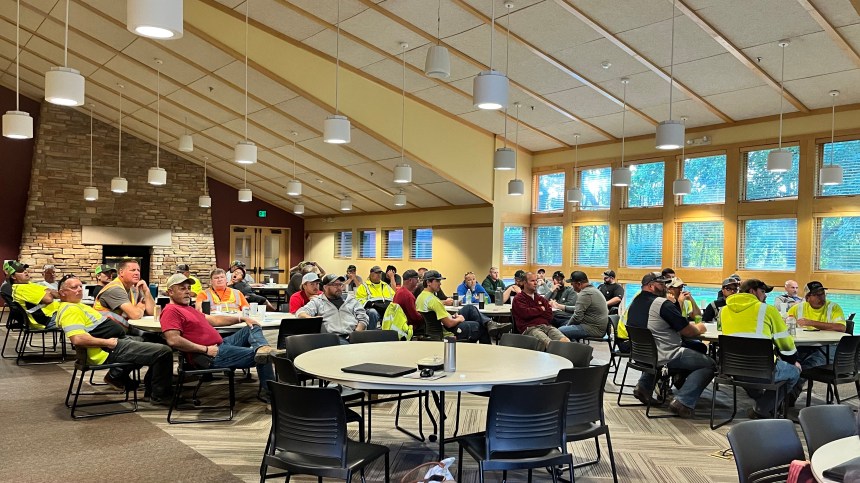
On a frigid day in January, 30 men and women gathered at Lakes Region EMS in North Branch to learn better strategies for managing rural roads during snowy winters and dusty summer days. The goal of the training, which was led by the Minnesota Pollution Control Agency (MPCA) and co-hosted by the East Metro Water Education Program (EMWREP) and Lower St. Croix Watershed Partnership, was to help small communities stretch their limited public works budgets while also protecting local lakes and streams from salt and sediment pollution.

Chloride (salt) pollution is a growing concern in the upper Midwest. Already, there are 67 lakes and streams in Minnesota and 51 in Wisconsin that are considered permanently impaired (ie. contaminated) by chloride. More than 100 additional water bodies have rising chloride levels and are at high-risk of becoming impaired in the near future. Impaired lakes and streams can be toxic for fish and other wildlife and are prone to secondary problems as well, including frequent blue-green algae blooms.
Launched in 2008, SMART Salt Certification programs teach snowplow drivers, private contractors, and property managers how to reduce their winter salt use while maintaining public safety. Currently, there are nearly 1200 SMART salt certified staff and contractors in Anoka, Chisago, Isanti, Ramsey and Washington Counties, and participating communities have been able to cut their winter salt use by 30-70 percent as a result.

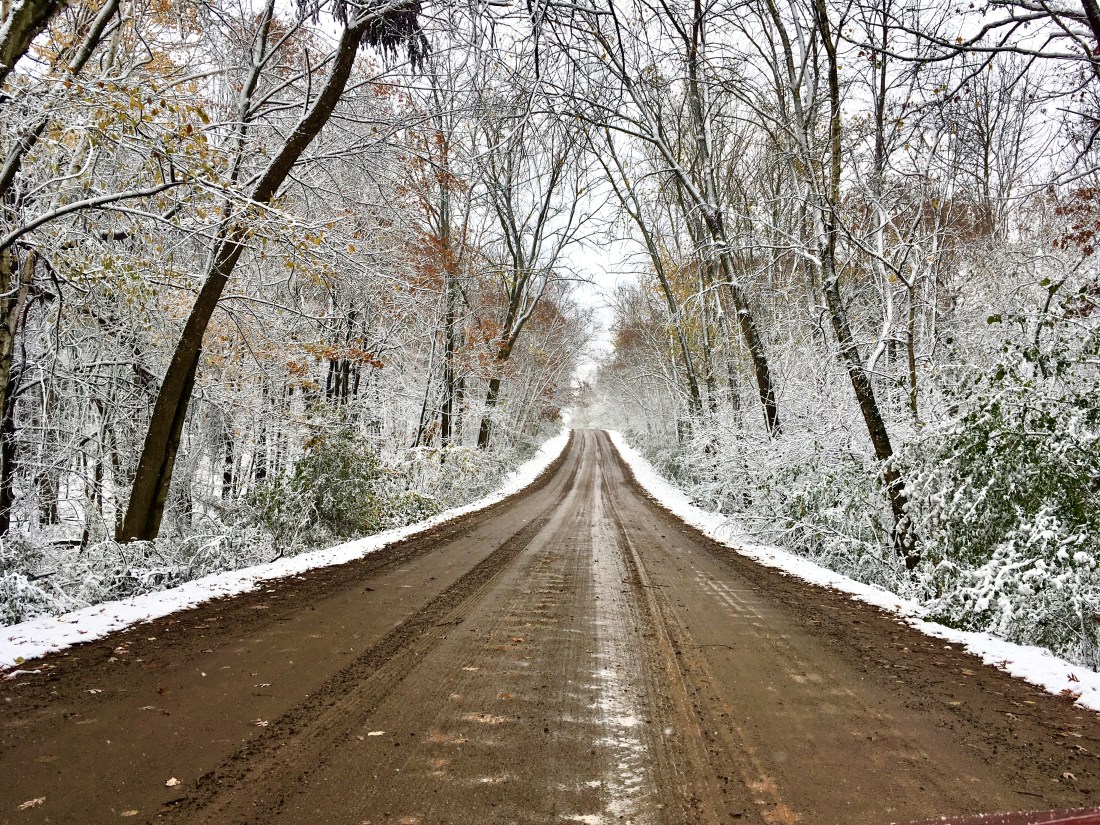
Road maintenance in rural communities like Grant and Stillwater Township is significantly different than in larger cities like Oakdale and Woodbury. For example, it is standard practice to plow down to the pavement along paved highways and arterial roads. On gravel roads, however, plow drivers have to keep their blades higher and/or use a different style of plow blade to avoid digging into the road bed below. During last week’s workshop in North Branch, participants also shared some of their more creative winter maintenance strategies, such as spreading crushed Dresser trap rock over compacted snow to provide traction on smaller roads.
Chloride-based dust suppressants are another surprising source of salt pollution discussed at last week’s training. Dust suppressants are commonly used on gravel and dirt roads during the spring and summer, as well as at construction sites during dry weather. But, there are also chloride-free alternatives, including lignin sulfonate (a byproduct from pulp and paper mills), synthetic and acrylic polymers, glycerin-based products, bitumen emulsions (droplets of asphalt), and even molasses.
The Rural Roads SMART Salt Training was one of many initiatives happening this January to educate and engage local communities in reducing chloride water pollution. In addition, several watershed districts (South Washington, Ramsey-Washington Metro, Rice Creek, Coon Creek, and Vadnais Lakes Area) have distributed chicken grit to homeowners to use in lieu of salt on driveways and sidewalks, there have also been free daily webinars during Winter Salt Week (Jan. 26-30), and a suite of educational materials on display at the R.H. Stafford Library in Woodbury.
To learn more about chloride water pollution and find tools, resources, training and assistance for communities and organizations in Minnesota, visit www.pca.state.mn.us/pollutants-and-contaminants/chloride.


 East Metro Water